
Core Skills Focus
Build essential history skills for students through source analysis, chronological thinking, essay writing, and connecting past events to global themes.
Articles
How to Analyze Historical Sources (Bias, Context, Intent)
Introduction / Hook
Imagine discovering a yellowed letter penned during World War I with its edges frayed, the tone raw with emotion. You hold it, hoping it reveals the author’s truth, yet something nags: are you seeing the whole story, or a filtered fragment? That tension lies at the heart of historical analysis. To responsibly interpret documents from the past, historians rely on three pillars: Bias, Context, and Intent. These guide us beyond mere words, helping us ask: Who wrote this? In what era? For what purpose? Treating each source as both a window and a veil, we learn to reconstruct events with nuance, skepticism, and insight. This article shows you how.

1. Placing the Source in Time and Space
Understanding when and where a source was created is the first step toward interpretation. Situating documents within their historical moment helps identify the pressures and events shaping the author’s perspective. For instance, a declaration issued in 1941 Tokyo carries layers of wartime nationalism; a hastily scribbled letter on scrap paper might reflect scarcity and urgency. Context isn’t just backdrop—it actively shapes content.
- Identify date, location, medium, and socio-political climate.
- Examine physical attributes: paper quality, handwriting, format.
- Recognize that context influences tone, language, and perspective.
2. Identifying Author Bias
Bias lurks in every source and spotting it sharpens our understanding of what’s reliable, what’s slanted, and what’s omitted. Bias appears through emotive language, selective framing, and omissions. Every creator from diarists to officials’ news events through a personal lens shaped by class, race, religion, politics, and culture. Julius Caesar’s Gallic Wars, for instance, elevates Roman triumphs while downplaying failures, revealing a pro-Caesar slant.
- Look for emotionally charged adjectives, selective reporting, or omissions.
- Distinguish balanced vs. “pro-” or “anti-” stances.
- Ulterior motives don’t invalidate a source—but require scrutiny.
3. Deciphering Purpose and Audience
A source’s intent, or what it aims to achieve and whom it’s addressing shapes content significantly. We must ask: was this public propaganda or private reflection? A wartime poster urging unity is propagandistic; a confidential diary is introspective. Recognizing intent and audience helps us evaluate reliability and informative value.
- Determine whether the source is for public persuasion or private record.
- Reflect on how intended audience shapes tone and content.
- Ask: Was it commissioned, suppressed, or self-published?
4. Authenticating and Evaluating Credibility
Before trusting a source, we must verify its authenticity, provenance, and factual accuracy. Scholars recommend analyzing authorship, proximity to events, and consistency with other records. This includes examining whether citations and claims hold up to scrutiny. For example, historians compare Confederate editorials with battlefield logs to unmask propaganda.
- Check who wrote it, when, where, and how it reached you.
- Cross-reference facts with independent sources.
- Assess internal consistency and absence of contradictions.
5. Corroborating Across Multiple Sources
No historical truth stands on one source alone. Comparing documents or the process of triangulation sifts out anomalies and enriches interpretation. Corroboration is essential for verifying accuracy and filling in narrative gaps. For instance, reconstructing wartime civilian experiences may require diaries, diplomatic cables, and photographs together.
- Seek independent confirmation from diverse sources.
- Identify convergence and divergence in testimonies.
- Understand that discrepancies may signal bias or hidden complexity.
6. Guarding Against Pitfalls (Presentism & Confirmation Bias)
Two traps threaten analysis: applying modern standards to historical agents (presentism), and seeking only evidence that confirms our preconceptions (confirmation bias). Presentism distorts meaning by judging the past with today’s values. Meanwhile, confirmation bias blinds us to inconvenient facts and alternate viewpoints. Historians combat both through self-awareness and a commitment to objectivity.
- Avoid judging historical actions by later moral or cultural standards.
- Stay alert to seeking confirmation instead of challenging assumptions.
- Use divergent sources and self-reflection to neutralize bias.
7. Drawing Inferences and Building Narratives
After grounding, bias-checking, and corroboration, historians weave evidence into meaningful narratives. This involves interpreting what is said and also why it is said, what is unsaid, and how it fits into broader trends. A laborer’s letter might reveal both daily hardship and structural inequality, which is a a layered perspective absent in official records.
- Ask “how” and “why,” not just “what.”
- Acknowledge limitations and ambiguities.
- Construct interpretations rooted in evidence, not assumption.
Conclusion and Implications
Analyzing historical sources is a disciplined, multi-step process. We begin by anchoring each document in its time and space, then uncover bias through language and omission, discern its purpose and audience, verify authenticity, corroborate across materials, guard against presentism and confirmation bias, and finally draw evidence-based inferences. Each layer of analysis reveals what happened, why and how those events were recorded or hidden.
In today’s information age, these skills matter beyond academia. From distinguishing fake news to evaluating leaders’ statements, historical source analysis trains us to think critically, challenge narratives, and seek evidence-based truth.
Call to action: The next time you encounter a historical text, or any persuasive narrative, don’t forget to ask:
- Who created this and when?
- Why was it made, and who was it meant for?
- What’s missing or exaggerated?
- How does this align with other perspectives?
By asking these questions, you sharpen your analytical mind and become a more discerning thinker, which are essential traits in any age. As a core skills focus, history doesn’t just tell us what happened; it equips us to make sense of the world with clarity and care. And thus, it is one of the most important history skills for students.
References
Wikipedia. “Presentism (Historical Analysis).” https://en.wikipedia.org/wiki/Presentism_(literary_and_historical_analysis)
History Skills. “How to Analyse Historical Sources.” https://www.historyskills.com/source-criticism/analysing-sources/
The Historical Association. “How to Work with Sources.” https://www.history.org.uk/
Number Analytics. “How to Evaluate Historical Sources.” https://numberanalytics.com/blog/historical-sources
Wikipedia. “Historical Method.” https://en.wikipedia.org/wiki/Historical_method
University of Texas at Arlington Open Press. “Evaluating Evidence.” https://uta.pressbooks.pub
Wikipedia. “Confirmation Bias.” https://en.wikipedia.org/wiki/Confirmation_bias
How to Read the News: Spotting Propaganda and Misinformation
Introduction
In a world where headlines are shared faster than facts can be checked, the ability to critically read the news has become essential. Whether through traditional newspapers, online articles, or viral social media posts, we’re constantly surrounded by information and misinformation. Propaganda distorts public perception for political gain. Misinformation spreads unintentionally, while disinformation is crafted deliberately to deceive. Learning how to read the news with skepticism, logic, and awareness is a critical skill for modern citizenship. This guide will help you recognize biased reporting, identify fake news, and protect yourself from manipulation.

1. The Difference Between Misinformation, Disinformation, and Propaganda
To understand how to detect falsehoods, we must first understand the types of misleading content:
- Misinformation is incorrect or misleading information shared without harmful intent like wrongly citing a death toll or misquoting a leader.
- Disinformation is deliberately false information created to deceive, often for political or financial purposes.
- Propaganda is the strategic use of emotionally charged or biased content to influence public opinion, which are often hiding or distorting facts.
Disinformation is often disguised as genuine news, while propaganda can appear in both authoritarian and democratic media systems. Recognizing these forms is the first step to becoming an informed reader.
2. Understand News Structures and Formats
Legitimate news usually follows clear standards:
- Headline: Summarizes the story concisely without exaggeration
- Lead paragraph: Gives the most important details (who, what, when, where, why, how)
- Supporting evidence: Includes quotes, verified facts, and multiple viewpoints
- Source transparency: States who conducted interviews or wrote the article
Fake or misleading news often lacks attribution, oversimplifies complexity, or omits key context. Watch out for sensationalized headlines, clickbait titles, and vague language.
3. Check the Source: Is It Credible?
Always ask: Where did this news come from?
Tips to verify source credibility:
- Search for the publisher’s history and bias using sites like Media Bias/Fact Check or Ad Fontes Media.
- Avoid articles that don’t list an author, lack publishing dates, or are hosted on sites with unusual URLs.
- Be cautious of anonymous or unverifiable “experts”.
- Check whether the story has been reported by multiple independent outlets.
Real journalism includes accountability, while low-quality sources often spread unverified rumors or deliberate misinformation.
4. Spotting Propaganda Techniques
Propaganda uses emotion and manipulation more than evidence and logic. Common techniques include:
- Glittering generalities: Vague, positive phrases that sound appealing but lack substance (e.g., “freedom-loving nations”).
- Name-calling and labeling: Using pejoratives to discredit opposition without factual evidence (e.g., “traitor,” “fake patriot”).
- Bandwagon appeals: Suggesting everyone supports one idea (“The whole country agrees…”).
- Fearmongering: Exaggerating threats or dangers to create panic.
- Cherry-picking: Presenting only data that supports one side.
- False dilemmas: Posing only two extreme options when many exist.
Such tactics can be found in political advertisements, talk shows, and even mainstream headlines, especially during election cycles or conflicts.
5. Verify Facts Before Sharing
Before reposting a claim or sharing a viral graphic:
- Google the claim and see if credible sources report it.
- Use fact-checking sites like Snopes, PolitiFact, or AP Fact Check.
- Check the date as old news is sometimes recycled as current.
- Look for original sources and don’t trust summaries alone.
- Reverse-image search pictures to detect reuse or manipulation.
A study by MIT found that false news spreads faster and deeper than real news especially on Twitter. Critical readers are society’s first line of defense.
6. Read Laterally, Not Vertically
One of the most effective media literacy habits is lateral reading, leaving the article to investigate the source, author, publisher, and citations.
Don’t read in isolation. Instead:
- Open new tabs to check publisher credibility.
- Compare the story across multiple outlets.
- Research the organization behind any report or statistic.
Professional fact-checkers do this routinely and it leads to faster, more accurate judgments.
7. Understand Your Own Bias
Cognitive biases influence how we interpret information. Among the most dangerous are:
- Confirmation bias: Favoring news that confirms what you already believe
- Negativity bias: Giving more weight to alarming or upsetting stories
- In-group bias: Trusting claims from your own social or political group
Ask yourself:
- Do I believe this because it’s true or because I want it to be?
- How would I feel if this news said the opposite?
Awareness of your own mindset helps you be a more honest and open reader.
8. Social Media and the Algorithms of Attention
Social media platforms don’t show you the most accurate news they show you the most engaging. Their algorithms reward:
- Emotionally charged language
- Controversial or polarizing content
- Content that confirms your past behavior
This creates filter bubbles and echo chambers, limiting your exposure to diverse viewpoints. Break out of this cycle by:
- Following reputable, international, and ideologically diverse news outlets
- Engaging critically, not emotionally
- Taking breaks from the news when overwhelmed
9. Global Perspective: Misinformation Isn’t Just Local
Misinformation and propaganda are global problems. In:
- Russia, state-controlled media promotes official narratives while suppressing dissent.
- Myanmar, Facebook posts were used to incite ethnic violence.
- The U.S., partisan cable news and election-related conspiracy theories have undermined trust in institutions.
International cooperation, media literacy education, and platform accountability are all necessary to combat these challenges.
10. Build News Literacy Skills
News literacy is the ability to distinguish fact from opinion, recognize bias, and evaluate sources. It’s a skill, not an instinct, and that requires practice.
What you can do:
- Read from fact-based sources like public broadcasters and investigative journalism outfits
- Participate in workshops, online courses, or simulations (like News Literacy Project’s Checkology)
- Teach others especially young people to ask critical questions
Schools, governments, and citizens all have a role in spreading media literacy to defend truth and democratic dialogue.
Conclusion
Reading the news is no longer a passive activity. In today’s fast-moving and polarized world, it requires curiosity, skepticism, and a toolkit of critical skills. Whether you’re scrolling social media, watching a video, or reading the morning headlines, you have a choice: to be manipulated or to be informed.
By understanding propaganda techniques, verifying facts, checking your own biases, and reading laterally, you become a resilient thinker in the face of misinformation. Your ability to read the news wisely is a personal skill, as well as civic responsibility. Because democracy, truth, and justice depend on citizens who know how to tell the difference between what’s real—and what’s designed to deceive.
Learning how to analyze news critically also strengthens academic performance. It improves reading comprehension, evidence-based reasoning, essay writing, and the ability to compare sources, which areall essential skills in subjects like history, social studies, global politics, and even science. In classrooms, students who develop media literacy become not only better researchers but more engaged and informed contributors to discussions.
References
BBC – Fake News: What Is It and How to Spot It
https://www.bbc.co.uk/news/technology-51214244
Media Bias/Fact Check
https://mediabiasfactcheck.com
Ad Fontes Media Bias Chart
https://adfontesmedia.com
Snopes Fact-Checking
https://www.snopes.com
PolitiFact
https://www.politifact.com
AP Fact Check
https://apnews.com/APFactCheck
News Literacy Project – Checkology
https://newslit.org/programs/checkology/
Stanford History Education Group – Civic Online Reasoning
https://cor.stanford.edu
MIT Study: False News Spreads Faster
https://news.mit.edu/2018/study-false-news-spreads-faster-truth-twitter-0308
UNESCO – Journalism, ‘Fake News’ and Disinformation
https://en.unesco.org/fightfakenews
How Power Works: Basics of Political Systems
How Power Works: Basics of Political Systems
Introduction
Power is the engine of politics, which are determining who makes decisions, who enforces them, and how resources and rights are distributed. Political systems are the structures societies build to manage power. Some prioritize citizen participation, while others enforce control from the top down. Understanding three foundational systems: democracy, authoritarianism, and federalism, which are key to analyzing how governments function across the globe. These systems aren’t isolated; many countries blend elements of each. Studying how power operates through them helps us understand the past, assess the present, and shape the future.
Democracy: Rule by the People
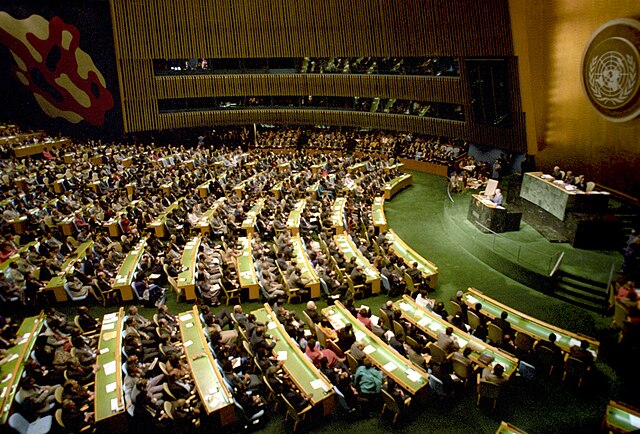
Democracy centers on the idea that power should rest with the people. This can occur either through direct participation or via representatives elected to act on behalf of the citizenry.
There are several models:
- Direct democracy, where citizens vote on laws themselves, exists today in limited forms such as referendums in Switzerland.
- Representative democracy is far more common. Citizens elect officials who pass laws and govern on their behalf. This includes countries like the United States, India, and Germany.
Within representative systems, two main forms exist:
- Presidential systems (e.g., the U.S.) separate executive and legislative powers.
- Parliamentary systems (e.g., the UK, Canada) link the executive directly to legislative support, with prime ministers typically drawn from the majority party.
Core principles of democracies include:
- Free, fair, and competitive elections
- Rule of law and due process
- Protection of civil liberties, such as freedom of speech, press, religion, and assembly
- Checks and balances between branches of government
Despite these ideals, democracies face real challenges. Low voter turnout, polarization, misinformation, and unequal representation can distort democratic intent. Additionally, the rise of “illiberal democracies” where elections exist but civil liberties are eroded threatens the strength of democratic institutions.
Authoritarianism: Rule from Above
Authoritarian systems concentrate power in the hands of a leader or small elite. Unlike democracies, they lack genuine competition, political freedoms, or robust checks on executive power.
Forms of authoritarianism include:
- One-party states, like China, where a single political party monopolizes governance.
- Military juntas, as seen in Myanmar, where military leaders take direct control.
- Personalist regimes, such as North Korea, which revolve around a central leader’s authority.
- Theocracies, such as Iran, where religious authorities govern in accordance with divine principles.
Common features of authoritarian rule:
- Suppression of dissent and political opposition
- State control over media and messaging
- Manipulated or symbolic elections
- Weak or controlled judiciary
Some authoritarian states present a facade of democracy, hosting elections or maintaining legislatures. These competitive authoritarian regimes (e.g., Hungary, Russia, Turkey) combine outward democratic features with undemocratic practices, like voter suppression or legal persecution of opponents.
Modern authoritarianism often relies more on legalism and technology, using surveillance, online censorship, and legal manipulation to maintain control, rather than on traditional violence.
Federalism: Power Shared Within
Federalism is a system in which power is constitutionally divided between a central government and regional governments. This allows for shared sovereignty and autonomous decision-making in areas like education, policing, or transportation.
Countries like the United States, Germany, India, and Australia follow federal systems. Their constitutions outline which powers belong to the national government and which are delegated to regional units.
Benefits of federalism include:
- Accommodation of diversity, especially in multi-ethnic or multi-lingual societies.
- Policy experimentation, as regions can test ideas without affecting the entire nation.
- Checks on centralized power, promoting accountability and responsiveness.
However, federalism can also create:
- Policy inconsistency, as laws differ between regions.
- Inequality, especially when wealth and public services vary by state or province.
- Gridlock or conflict, especially when regional and national governments are politically opposed.
Some federal systems are symmetrical (all regions have equal powers), while others are asymmetrical (certain regions have special status or additional authority). Spain’s autonomous regions and India’s union territories are examples of asymmetry in action.
Mechanisms of Power in Practice
Though categorized separately, democracies, authoritarian regimes, and federal states often rely on similar institutions such as courts, legislatures, and elections but use them differently.
| Political Mechanism | Democracy | Authoritarianism | Federalism |
| Elections | Free, fair, competitive | Rigged, symbolic, or heavily restricted | Varying across levels; sometimes democratic locally |
| Rule of Law | Courts independent from executive | Judiciary often controlled or politically aligned | Shared or separate legal systems at different levels |
| Civil Liberties | Guaranteed and protected by law | Limited or suppressed | Differ by region depending on laws and powers |
| Media & Information | Free press, multiple viewpoints | Censorship, state control, propaganda | Regional press may differ based on governance |
| Power Separation | Clear division between branches | Executive dominance, minimal checks | Division between central and regional governments |
Understanding these mechanisms reveals that power isn’t defined only by a system’s name but by how institutions function in practice.
Hybrid Systems and Gray Areas
Real-world governments rarely fall into neat categories. Many blend characteristics or evolve over time. Some important hybrid forms include:
- Constitutional monarchies like the UK and Japan, where monarchs are ceremonial and elected officials govern.
- Competitive authoritarian regimes like Hungary or Venezuela, where elections exist but are manipulated to favor incumbents.
- Decentralized unitary states, such as Indonesia or the UK (post-devolution), where power is granted to subnational units.
- Supranational federations like the European Union, where sovereign nations pool authority in areas like trade, environment, and immigration.
These mixed systems show that power structures can shift and adapt, sometimes strengthening freedom, sometimes eroding it.
Conclusion
Power is distributed, exercised, and justified differently across political systems. Democracies emphasize people’s participation and protection of rights. Authoritarian regimes centralize authority and restrict opposition. Federalism divides governance between multiple levels to balance unity and diversity.
Yet in practice, these systems overlap, blur, and evolve. Understanding how power operates legally, institutionally, and culturallym prepares us to interpret politics, but also to shape it.
Knowing how power works helps you evaluate your own government, participate as an informed citizen, and recognize when systems fall short of their ideals. Political literacy isn’t just about knowing terms; it’s about recognizing how lives are governed, and who gets to decide.
References
Wikipedia. “Competitive Authoritarianism.”
https://en.wikipedia.org/wiki/Competitive_authoritarianism
Britannica. “Democracy.”
https://www.britannica.com/topic/democracy
Britannica. “Authoritarianism.”
https://www.britannica.com/topic/authoritarianism
Wikipedia. “Federalism.”
https://en.wikipedia.org/wiki/Federalism
Encyclopedia Britannica. “Federal System of Government.”
https://www.britannica.com/topic/federalism
OpenStax. “Categorizing Contemporary Regimes.”
https://openstax.org/books/american-government/pages/17-1-categorizing-contemporary-regimes
Oklahoma Historical Society. “Types of Governments.”
https://www.okhistory.org/publications/enc/entry?entry=TY001
Howard Community College. “Types of Political Systems.”
https://pressbooks.howardcc.edu/policom/chapter/types-of-political-systems/
Wikipedia. “Authoritarianism.”
https://en.wikipedia.org/wiki/Authoritarianism
Wikipedia. “Democracy.”
https://en.wikipedia.org/wiki/Democracy
Role of Citizenship: Rights, Responsibilities, Civic Engagement
Introduction
Citizenship is more than just legal status. It defines an individual’s relationship with the state and shapes their duties to their society. Citizenship grants people rights and imposes responsibilities, but it also opens doors to participation, influence, and change. Whether in democratic or authoritarian states, the quality of citizenship reflects the health of governance and the vibrancy of civic life. This article explores how citizenship functions as both a personal identity and a collective responsibility, centered on rights, duties, and civic engagement.

1. Rights of Citizenship
Legal rights are foundational to citizenship. They provide security, dignity, and the ability to live freely under law. In most modern systems, these rights fall into three categories:
Civil Rights
- Freedom of speech, religion, press, assembly, and privacy
- Right to equality before the law
- Freedom from arbitrary arrest and detention
Political Rights
- Right to vote in free and fair elections
- Right to run for office and participate in political parties
- Right to petition, protest, and access information
Social and Economic Rights
- Right to education, healthcare, housing, and work
- Right to form labor unions and fair labor practices
- Right to access social security and welfare services
In democratic states, these rights are typically guaranteed by constitutions and international conventions. In authoritarian regimes, however, these rights may be suspended, manipulated, or only apply selectively. Regardless of regime type, rights are never absolute as they depend on legal institutions, culture, and civic participation to be realized.
2. Responsibilities of Citizenship
Just as citizenship offers rights, it imposes responsibilities. These range from legally enforced obligations to voluntary civic duties that maintain social cohesion and political legitimacy.
Legal Responsibilities
- Obeying the law: All citizens are subject to the law and judicial rulings.
- Paying taxes: Taxes fund essential services such as education, infrastructure, defense.
- Jury duty: In some systems, like the U.S., citizens must serve if called.
- Military or national service: Some countries require citizens to serve in defense or civilian national roles.
- Mandatory voting: In countries like Australia, citizens must vote or face penalties.
Voluntary Civic Responsibilities
- Voting: While optional in many countries, it is a cornerstone of democratic life.
- Respecting others’ rights: Tolerance and empathy support pluralism.
- Community involvement: Citizens may volunteer, donate, or lead local projects.
- Staying informed: Knowing laws, policies, and government structures helps people make informed decisions.
These responsibilities are not only moral expectations but critical to the survival of institutions, trust in governance, and social accountability.
3. Civic Engagement: Beyond the Ballot Box
Civic engagement refers to the ways citizens actively participate in public life, shaping policy, culture, and community. It transforms passive subjects into agents of change.
Forms of Civic Engagement
- Electoral Participation: Voting, running for office, campaigning
- Public Advocacy: Petitioning, protesting, lobbying, attending town halls
- Community Service: Volunteering, joining local boards, supporting NGOs
- Digital Participation: Social media activism, online petitions, civic tech platforms
Civic engagement strengthens political legitimacy, fosters inclusion, and builds resilience against authoritarianism. It also promotes personal empowerment, with research showing links between civic action and individual well-being.
Youth Engagement
Young people are increasingly shaping global politics from climate activism and digital organizing to education reform and electoral movements. Despite facing barriers like inexperience, exclusion, or apathy, youth-driven organizations are driving turnout and civic revival. Early civic education increases lifetime engagement, and school-based programs have a profound impact on awareness and political action.
4. Global Variations and Exclusions
Citizenship is not uniform. Access to rights and civic space varies by region, race, gender, class, and legal status.
- Marginalized populations (e.g., ethnic minorities, refugees, and Indigenous groups) often lack equal access to civic rights.
- Stateless people are those without legal nationality, and are denied nearly all forms of public participation.
- Authoritarian regimes often block engagement through censorship, surveillance, and imprisonment of activists.
- Disparities in education and income affect knowledge and ability to participate in governance.
Even in liberal democracies, voter suppression, misinformation, and systemic discrimination continue to limit full participation. These exclusions highlight the need for inclusive civic education and broad-based policy reform.
5. Civic Education and Empowerment
Civic education is the tool by which societies prepare individuals to act as informed, responsible citizens. Effective programs include instruction in:
- Government structure and functions
- Human rights and constitutional principles
- Historical and contemporary civic struggles
- Debate, media literacy, and critical thinking
- Hands-on practice: mock elections, model governments, service projects
Countries that prioritize civic education such as Finland, Canada, and South Korea tend to score higher on civic literacy and democratic stability. Conversely, underinvestment in civic learning contributes to political apathy, radicalization, and declining trust in institutions.
6. Technology and Modern Civic Participation
The rise of digital platforms has transformed civic life:
Opportunities
- Lower barriers to entry through social media campaigns and e-petitions
- Youth can organize quickly and globally
- Access to real-time information and international solidarity
Risks
- Misinformation and algorithmic bias
- Online harassment discouraging participation
- Surveillance and data exploitation in non-democratic states
The digital world expands opportunities for engagement, but also raises new ethical and privacy concerns. Bridging the digital divide and investing in digital literacy is essential for equitable participation in 21st-century civic life.
7. Civic Power and Social Change
When citizens engage, societies evolve. Civic movements have challenged apartheid in South Africa, won voting rights in the U.S., overthrown dictatorships in Tunisia and the Philippines, and expanded environmental policy worldwide.
Civic power is built through:
- Collective action
- Community trust
- Knowledge of institutions
- Strategic use of law, media, and protest
Governments, in turn, respond through reform, negotiation, or repression. Civic momentum can be hard to sustain but history shows that active citizenship is a precondition for lasting justice and equity.
Conclusion
Citizenship is a practice instead of just status. It involves exercising rights, fulfilling duties, and engaging constructively in community and governance. Strong citizenship contributes to democracy, stability, equality, and individual empowerment. Weak or neglected citizenship leads to apathy, inequality, and authoritarian drift.
Every person, regardless of age or background, has a role to play. Whether through voting, volunteering, speaking out, or supporting others civic engagement is the engine of change. As challenges like polarization, disinformation, and authoritarianism rise, the future of democracy will depend not only on systems but on the citizens who sustain them.
References
Harvard Kennedy School – “Civic Engagement and Community Leadership”
https://ash.harvard.edu/publications/civic-engagement-and-community-leadership
U.S. Citizenship and Immigration Services – “The Rights and Responsibilities of U.S. Citizens”
https://www.uscis.gov/citizenship/learn-about-citizenship/the-rights-and-responsibilities-of-us-citizens
Center for Civic Education – “What are the responsibilities of citizenship?”
https://www.civiced.org/what-are-the-responsibilities-of-citizenship
Britannica – “Citizenship”
https://www.britannica.com/topic/citizenship
United Nations – “What is Global Citizenship?”
https://www.un.org/en/academic-impact/global-citizenship
Carnegie Corporation – “Youth Civic Engagement in the 21st Century”
https://www.carnegie.org/topics/topic-articles/civic-learning/youth-civic-engagement-21st-century/
International IDEA – “Digital technologies and civic engagement”
https://www.idea.int/publications/catalogue/digital-technologies-and-civic-engagement
UNESCO – “Global Citizenship Education: Topics and Learning Objectives”
https://unesdoc.unesco.org/ark:/48223/pf0000232993
IFES – “Youth Civic Engagement: Engaging the Next Generation of Citizens”
https://www.ifes.org/publications/youth-civic-engagement-engaging-next-generation-citizens
Youth.gov – “Civic Engagement”
https://youth.gov/youth-topics/civic-engagement
Brookings Institution – “A Crisis in Civic Education”
https://www.brookings.edu/articles/a-crisis-in-civic-education/
Pew Research Center – “What Americans Know About Civic Life”
https://www.pewresearch.org/politics/2018/04/26/what-americans-know-about-civic-life/
Mini Projects for Media Literacy and News Analysis
1. Fake News Detective Wall
Activity: Students gather suspicious news headlines or viral posts, verify them using fact-checking websites, and post them on a classroom wall labeled True, Misleading, Fake, or Satire, with explanations.
Why it’s good: This activity builds habit-forming critical thinking and helps students practice fact-checking skills in a tangible way. By physically organizing claims and reflecting on their credibility, students learn to spot red flags and understand the difference between misinformation and disinformation.
2. Propaganda Poster Remix
Activity: Students analyze historical propaganda posters, identify techniques (fear, bandwagon, glittering generalities, etc.), and create a modern version using the same style but with updated contexts or issues.
Why it’s good: Students develop visual literacy and learn how design, language, and emotion can be weaponized. Remaking posters helps them recognize propaganda across platforms from history books to TikTok and strengthens their understanding of persuasive media.
3. Lateral Reading Challenge
Activity: Present students with news stories or claims. They must research the credibility of the publisher, check outside sources, and determine accuracy using lateral reading techniques.
Why it’s good: This project mirrors how professional fact-checkers operate. Students learn that reading “across the web” (lateral) is more effective than trusting a single page. It sharpens investigative skills and teaches the importance of verifying information in a fast-paced media landscape.
4. “Headline or Hoax?” Game Show
Activity: Organize a quiz where students are shown real and fake headlines and must guess which are true. Include some satire or manipulated stories to make it challenging.
Why it’s good: Turning fake news detection into a game makes the learning interactive and memorable. Students become more attentive to word choice, source cues, and absurdities that often give hoaxes away. It also encourages collaboration and open discussion about media trust.
5. Build a Balanced News Feed
Activity: Students research media outlets across the political spectrum and create a weekly news digest that compares how different outlets report on the same story.
Why it’s good: This project develops media pluralism and empathy. Students gain awareness of ideological framing and learn that stories can be reported with drastically different tones depending on the outlet. It encourages reading beyond echo chambers.
6. “Mythbuster” Social Media Campaign
Activity: Students select a viral myth or misinformation trend and create a campaign (infographics, Instagram posts, short videos) debunking it with verified facts.
Why it’s good: This activity teaches students how to communicate truth effectively, using the same tools that spread falsehoods. By creating public-facing materials, they develop both digital literacy and social responsibility.
7. Digital Roleplay: Crisis Reporting Simulation
Activity: Students simulate a breaking news event (e.g., political unrest, health emergency). Roles are assigned, for example journalist, activist, propaganda channel, government official while each student/group writes or records a report from their viewpoint.
Why it’s good: This immersive activity shows that the same event can be interpreted in multiple ways. Students learn how perspective, bias, and agenda shape narratives. It builds empathy, editorial judgment, and a deeper understanding of source reliability.